
'Antibodies remain in the blood for at least seven to nine months.'

'Someone may have diabetes, but at what level the disease qualifies as a comorbid condition is something a doctor will decide upon and certify accordingly.'

If the vaccine is recommended for use as a booster against Omicron, it may significantly boost the demand for Covishield in India.

Life insurers' new business premium (NBP) reported stellar performance in November after a poor showing in October, on the back of strong growth in group single premiums for both private insurers and Life Insurance Corporation (LIC) of India. In November, 24 life insurers, including LIC, reported NBP to the tune of Rs 27,177 crore, up 42 per cent year-on-year (YoY) from the year-ago period. Private insurers' NBP rose 58.63 per cent YoY to Rs 11,209.75 crore as group single premiums more than doubled during this period.

As the Omicron variant of Sars-CoV-2 takes centrestage, vaccine makers in India are of the view that scaling up the existing vaccines to make them more effective is possible.

The share of total health expenditure as part of the gross domestic product (GDP) went down to 3.3 per cent in 2017-18 from 3.8 per cent in the previous two years, according to the national health account data released on Monday by the health ministry. The share of government expenditure as part of total expenditure as well as GDP has gone up from from 3.78 per cent to 5.12 per cent between 2013-14 and 2017-18, which could also explain a decline seen in out of pocket expenditure in 2017-18. Health ministry also emphasised the increase in the government health expenditure as part of the total GDP from 1.15 per cent in 2013-14 to 1.35 per cent in 2017-18.

After ramping up production to meet the steep demand spike during the Covid-19 pandemic, Indian medical device makers are now struggling with idle capacity. According to industry estimates, around a third of the installed capacity, especially for consumables, disposables, small-ticket electronic items, etc., is lying unutilised. Sample this: India used to produce just 6.24 million pieces of PPE kits per annum before the pandemic, but by June this was ramped up to 233.87 million pieces per annum.

'Antiviral treatment will have no change. Spike protein change may affect the immunity protection.'
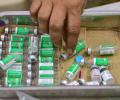
With around 2 million Covid vaccine doses likely to get wasted in December, leading hospital chains have now started to give it gratis to citizens. Sohini Das and Ruchika Chitravanshi report.

Life insurers, on the prodding of global reinsurers, are set to hike premiums on term plans because rising mortality after the second wave of the pandemic has led to an increase in the number of settlements. Some will do so next month while others may wait till January. Global reinsurer Munich Re had nudged its insurance partners on the hike in September and insurers have been engaged in negotiations with the reinsurer on the amount of the increase. Term plan prices in India were among the lowest in the world for a long period but in the past couple of years, they have been increased a few times.

A nasal vaccine, one expert said, is a "fantastic idea" for two reasons -- one, it can potentially create sterile immunity, and two, it is easy to administer and thus scalable.

'Last year (FY21), we had about 1 million intimated claims for Covid.' 'This year (FY22), in six months, we got about 1.6 million claims.'

Rapid strides in digital payments notwithstanding, the Indian economy will likely remain cash-dependent for many years to come, at least that's what the automated teller machine makers and cash logistics companies are betting on. After growing at over 20 per cent for most of 2020, currency in circulation growth fell to 8.5 per cent as of October 29 this year, shows data from the Reserve Bank of India (RBI). The reason for the steep rise in currency last year was the uncertainties related to the Coronavirus (Covid-19) pandemic, where people preferred to hoard cash to meet exigencies.

'There will be partnerships between banks and fintech firms, but there will also be areas where they will be direct competitors.'

Credit card spends jumped 57 per cent year-on-year (YoY) in September, aided by the festive season. According to the latest Reserve Bank of India (RBI) data, in September, credit card spends totalled Rs 80,477.18 crore compared to Rs 77,981 crore in August, thereby registering a 3.2 per cent growth sequentially, despite the high base. In the corresponding period last year, credit card spend was to the tune of Rs 51,356.68 crore.

More than three weeks have passed since the Reserve Bank of India's (RBI's) new guidelines on e-mandates for recurring payments came into effect but consumers are still taking to social media platforms to complain about the disruptions they are facing. This comes as most stakeholders in the ecosystem have not put in place systems in accordance with the new rules, resulting in many transactions not going through. Industry sources said most banks are still not ready, especially the smaller ones.
Nearly two million e-mandates for recurring payments have been registered with banks and card networks after the Reserve Bank of India (RBI) made it mandatory from October 1 to take prior consent of a customer before debiting her account, sources in know of the matter said. Industry estimates peg the recurring transactions at approximately 2.5 per cent of the total volume of transactions, and about 1.5 per cent in terms of value. Of these, around 75 per cent of domestic recurring transactions, and about 85 per cent international recurring payments are below Rs 5,000.

After the second wave of the pandemic, general and health insurers have seen a fall in their outgo of Covid-related health claims. In the July-September quarter (Q2 of FY22), insurers settled a little over Rs 5,000 crore worth of Covid health claims. This is 35 per cent lower than the Rs 7,700 crore worth of claims they settled in Q1, sources said.
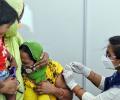
Experts, however, feel that given the intensity of the second wave and the high single dose coverage, India is in a good position to avoid any drastic wave in the near future.
Tamil Nadu plans parallel programme with unique user IDs
 © 2026 Rediff.com - Investor Information - Advertise with us - Disclaimer - Privacy Policy - Sitemap - Feedback - About us - Terms of use - Grievances